
There’s a moment most educators and parents recognise. A student stares at a test paper, eyes welling up. A teenager halfway up a hiking trail says, “I can’t do this.” A young person shuts down after making a mistake and quietly decides they’re “just not good at it.”
Somewhere along the way, struggle became synonymous with failure. But what if it’s actually evidence that growth is happening?
When Did Struggle Become the Enemy?
Modern education systems reward outcomes. Scores. Rankings. Achievements. Performance.
At the same time, many young people are growing up in environments where discomfort is quickly removed. Problems are solved for them. Obstacles are cleared. Mistakes are softened.
Layer in social media — where success is curated and struggle is rarely visible — and it’s no surprise many young people interpret difficulty as deficiency.
Yet historically, challenge was expected. It was even celebrated. Across cultures, rites of passage intentionally required young people to step into discomfort, not to harm them, but to strengthen them. Somewhere between overprotection and performance pressure, we’ve lost the understanding that struggle is not the opposite of success. It’s often the path to it.
The Science of Productive Struggle
Research consistently supports what many of us know intuitively: growth requires effort. Research demonstrates that students who believe abilities can be developed through effort show greater resilience, motivation, and long-term achievement than those who believe intelligence is fixed. When students interpret challenge as a sign of growth rather than inadequacy, they persist longer and perform better.
In cognitive psychology, research shows that learning tasks that require effort and retrieval (even if they feel harder) lead to stronger long-term memory and understanding.
Struggle strengthens neural pathways.
Similarly, resilience research indicates that exposure to manageable stress helps build coping capacity.
Even neuroscience reinforces this: Research on neuroplasticity confirms that the brain forms and strengthens connections through effortful practice and challenge.
In other words: growth requires effort, challenge and struggle, not the absence of it.
The Difference Between Healthy Challenge and Harmful Stress
Not all stress is equal. The key distinction is between overwhelming stress and supported challenge. Psychologists often describe three developmental zones:
1. Comfort Zone
Where tasks feel easy and predictable.
There’s little anxiety — but also little growth.
2. Stretch Zone
Where the task feels difficult but achievable.
There’s discomfort — but also support.
This is where learning happens.
3. Panic Zone
Where the challenge feels overwhelming and unsafe.
Here, stress inhibits learning and triggers fight, flight, or freeze.
The goal is not to push young people into panic. It’s to intentionally guide them into the stretch zone where growth is possible because support is present.
This aligns with research from the Center on the Developing Child at Harvard University, which distinguishes between “toxic stress” (chronic, unbuffered adversity) and “tolerable stress,” which can promote resilience when supported by stable relationships.
Effective support means knowing when to encourage a young person to stay with the challenge, and when to provide guidance so the experience remains growth-producing rather than panic-inducing.
What Happens When We Remove Struggle?
When young people rarely experience supported challenge, unintended consequences can emerge:
- Low frustration tolerance
- Fear of failure
- Avoidance behaviours
- Perfectionism
- Reduced persistence
Research found that students praised solely for intelligence were more likely to avoid difficult tasks and give up after setbacks compared to those praised for effort and strategy.
If we rescue too quickly, we unintentionally teach young people that struggle is dangerous. But when they overcome something difficult — especially something they once believed they couldn’t do — confidence becomes internal rather than external. They don’t just succeed. They become someone who can succeed.
Struggle in Action: The Outdoor Advantage
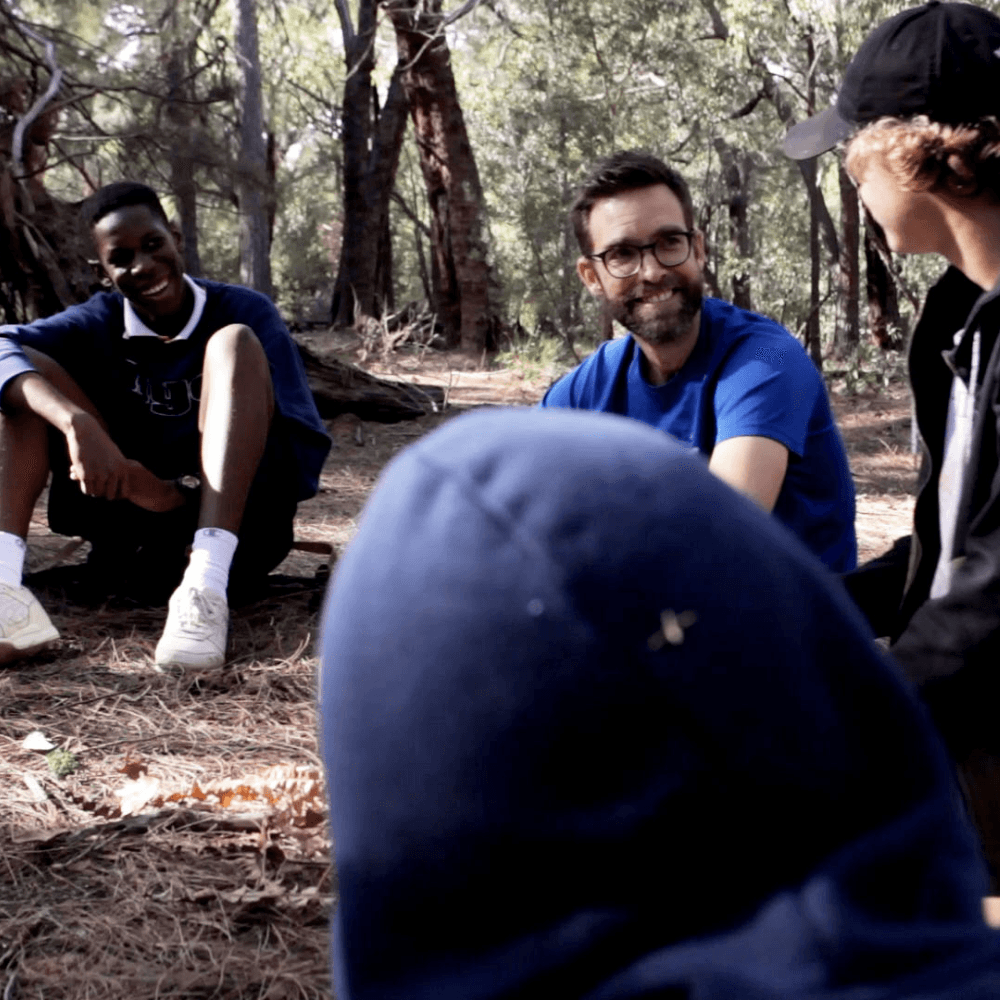
In nature-based learning environments, struggle shows up naturally. A student halfway through a paddle who wants to quit. A group navigating conflict during an expedition. A young person confronting self-doubt on a climbing wall.
At AdventureWorks WA, challenge is never random. It’s scaffolded. Facilitated. Reflected upon. Students don’t just complete a hike — they process what it required. They don’t just overcome a setback — they reflect on the process.
Shared challenge also builds belonging. Research in social psychology suggests that shared adversity increases group cohesion and prosocial behaviour, strengthening empathy and connection. When struggle is witnessed, it becomes meaningful. When it’s supported, it becomes transformative.
Practical Ways to Encourage Healthy Struggle
Supporting healthy struggle isn’t about making things harder for young people — it’s about being intentional with how we respond when things are hard.
For educators and parents, this begins with allowing what psychologists sometimes call a “productive pause.” When a young person hits a roadblock, our instinct is often to step in quickly — to fix, clarify, or rescue. But growth lives in the few moments just before the solution appears. Giving them space to think, try, adjust, and try again builds far more than competence — it builds belief.
How we praise matters too. When we focus solely on outcomes — marks, wins, achievements — we unintentionally teach that success is about performance. But when we highlight effort, strategy, courage, and persistence, we reinforce that struggle is part of the process. Comments like, “I noticed you kept going even when that got frustrating,” or “What strategy helped you move forward?” shift the emphasis from results to resilience.
Introducing manageable, age-appropriate challenges regularly is equally important. This might look like encouraging public speaking in small steps, allowing students to navigate peer conflict with guidance rather than intervention, or creating structured outdoor challenges where discomfort is expected but supported. Repeated exposure to stretch-zone experiences builds emotional endurance over time.
Perhaps most importantly, model your own learning process. Share stories of mistakes you’ve made. Let young people see you wrestle with something new. When adults openly acknowledge, “This is outside my comfort zone,” or “I didn’t get that right the first time,” we normalise imperfection and persistence.
A New Definition of Success
Success is not the absence of struggle. It is the capacity to move through it. If we want resilient, capable adults, we must stop asking how to eliminate difficulty.
And start asking: How do we help young people grow because of it?
Sources.
1 – Carol Dweck Mindset: The New Psychology of Success (2006) https://teachingcommons.stanford.edu/teaching-guides/foundations-course-design/learning-activities/growth-mindset-and-enhanced-learning#:~:text=Research%20has%20shown%20that%20when,the%20mindset%20of%20their%20students.
2 – Dr Robert Bjork Desirable Difficulties. https://theeffortfuleducator.com/2020/05/22/desiring-difficulties/