
Count the badges at your next whole-school assembly.
Two captains, usually. A vice-captain or two. House captains, prefects, a few portfolio leaders for sport, service, the arts. Depending on the school, it lands somewhere between a dozen and twenty students, drawn from a Year 12 cohort that might number 150 or 200.
Those students will learn a great deal this year. They’ll run meetings, speak in front of hundreds of people and take on problems that aren’t theirs to carry alone. More often than not, they’ll find a way through.
The rest of the cohort will learn something too. Most of them will learn that leadership belongs to someone else.
Nobody intends that. It’s simply what the structure teaches.
The Badge Works Which Is Exactly The Problem
There’s decent numbers of Australian research on what holding a formal role does to a young person, and the news is good. A study of school captains across a group of Queensland schools found the position touched almost every part of their lives: relationships, wellbeing, self-management, confidence, even how they handled their own learning. The researchers concluded that captains were likely to mature faster than they otherwise would have, because of the responsibility and the self-awareness that came with the job.
So the role does what we hope it does.
Which raises an awkward question. If carrying real responsibility accelerates maturity, why do we hand it to such a small number of students, and only in their final year?
Researchers have been asking this for a while. Formal student leadership roles have been criticised for not including the whole student body, and some of the work goes further. A study of prefects in two Australian girls’ schools found the roles tended to reward compliant, obedient and dutiful leadership, rather than the problem-solving, relational and creative kind. The prefects were, in effect, being trained to be reliable deputies for the staff.
That’s a useful skill. It’s not quite the same thing as leadership.
What Leadership Looks Like When It’s Shared And Distributed
We see this play out on almost every program we run, and it rarely looks the way people expect.
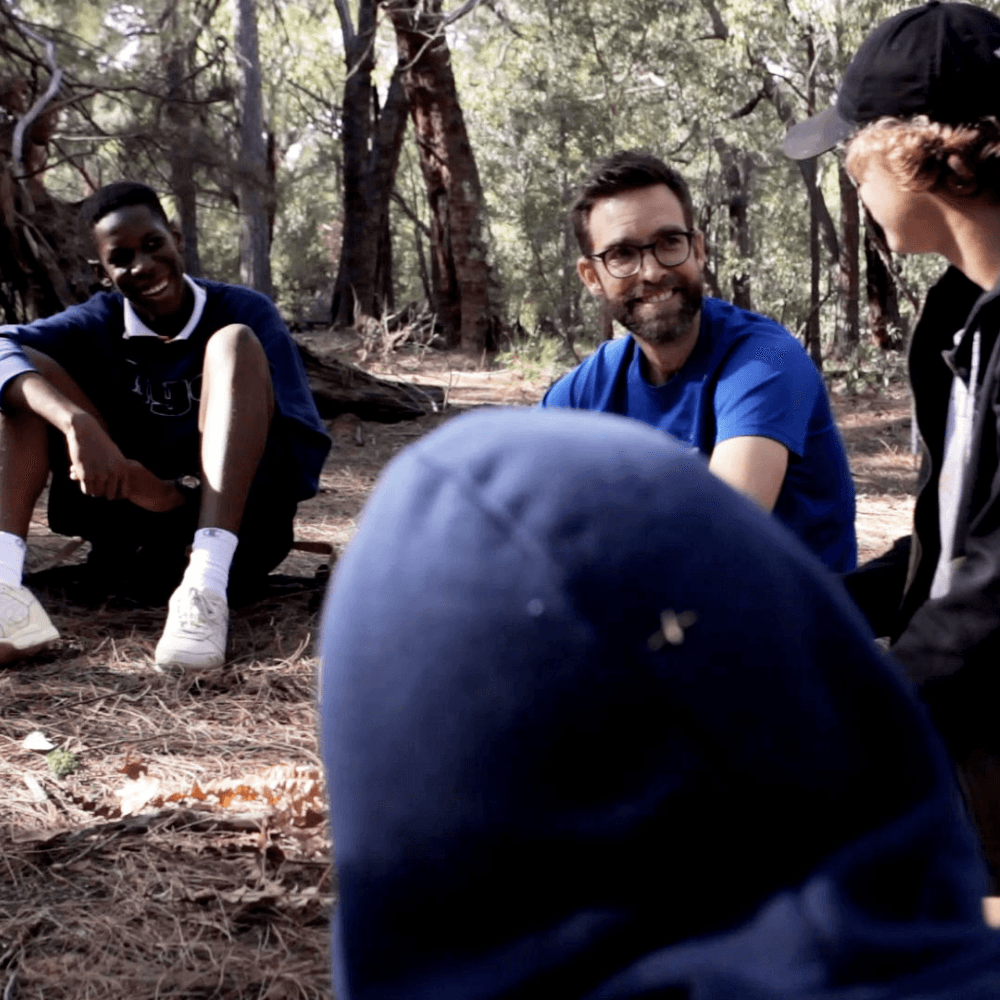
A group of Year 9s is halfway through a bushwalk navigation leg and has clearly taken a wrong turn. The loudest kid wants to push on. Another student, one who hasn’t led the group yet that day, is the one who stops, pulls out the map and says, “Hang on. I think we’re here.” The group listens. Twenty minutes later they’re back on track, and something has shifted in how that student sees themselves.
Or there’s the student who notices someone at the back is struggling with their pack and quietly swaps loads without making a thing of it. Or the one who holds the group to the agreement they made the night before, even when it’s inconvenient and costs them some popularity.
These moments share a few things. The responsibility is real, not simulated. The consequences are visible and immediate. And it’s shared around the group rather than held by one person.
That last part matters most. When leadership is distributed, every student gets repetitions. When it’s positional, a handful get hundreds of repetitions and everyone else watches.
Why It Has To Start Before Year 11
Most schools begin thinking seriously about student leadership in Year 10, when the selection process for the following year starts to loom. Research from Western Australia has noted that student leadership has traditionally been treated as the territory of senior students, with far less attention paid to how schools grow in the middle years.
By the time nominations open, most students have already made up their minds about whether they’re “leadership material”. A Year 12 election rarely changes that view. It mostly confirms it.
If the goal is a cohort where leadership is normal, the work needs to happen in Years 7, 8 and 9, while identity is still being formed and before the sorting has happened.
The Difference Belief Makes
There’s a reason the same students tend to end up with the badges. They’re the obvious choice. They’ve already shown what they can do, and their teachers believe they’re capable of more. Ask most teachers and they’ll tell you they could pick next year’s Year 12 leaders back in Year 9 or 10.
But think about who puts their hand up for a leadership role in the first place. It’s usually the student who’s already confident, who already has a solid sense of self-worth, and who has had adults backing them for years. The selection process doesn’t build that belief. It rewards it.
We notice this most when teachers join us on camp. Before the program gets going, we often have a quiet conversation with staff about leaving their preconceptions at the door. That means the behaviour they’ve come to expect from certain students, and the relationships they’ve already built with them back at school. Those relationships matter. But a young person needs room to be, or become, someone different, and that’s hard to do when the adults around them have already decided who they are.
Young people tend to succeed more when someone genuinely believes in them. Kept for a chosen few, that belief mostly reinforces the students who already had it. Extended to every student, it could change the lives of a whole cohort.
One Leadership Day Won’t Do It
This is where good intentions often run aground.
A leadership day, a guest speaker, a retreat for the newly appointed prefects. All of them can be excellent, and students usually come back fired up. The trouble is that capability doesn’t come from a single experience, however memorable.
The research on experiential programs backs this up. A large meta-analysis of adventure education, pulling together 96 studies, looked at outcomes including leadership and self-concept. By the end of the programs, the average effect size was 0.34. Unusually for education research, participants kept improving after the program ended, with further gains showing up at follow-up. The effects also grew stronger the longer the program ran and the older the participants were.
Longer is better. Connected is better. A morning is not an arc.
A Few Things Schools Can Change
You don’t need to tear up your prefect system to make progress. Some practical moves we’ve seen work:
Rotate responsibility, not just roles. On camps, in projects, in class groups, make sure the person leading changes every day or every task. Some students will find it uncomfortable. That’s the point.
Give real stakes. Leadership doesn’t grow when the decision doesn’t matter. Hand students choices that genuinely affect the group, including ones that might go wrong.
Build in the debrief. The experience alone isn’t enough. Reflection is where a student connects “I stopped the group and checked the map” to “I’m someone who can do that.” Without it, the moment fades.
Rethink what captains are for. Keep the senior roles, but shift their purpose. A captain whose job includes growing leadership in the Year 8s is doing something very different from one who runs assembly and meets visitors at the door.
Ask students what they think leadership is. Then listen. The answers are often more thoughtful, and more critical of the badge system, than adults expect.
Leadership For The Whole Cohort
It’s easy for leadership to end up resting on one or two students. Sometimes it’s the captain everyone saw coming. Sometimes it’s the quiet student we’d love to see step up. Either way, the focus narrows to a couple of names, and the rest of the year group drifts out of view.
A fairer approach doesn’t move the spotlight from one student to another. It widens it. The confident Year 12 who’ll stand at the lectern deserves the chance to grow, and so does the student who’s never put their hand up, and so does everyone in between.
That means every young person gets real responsibility, honest feedback, adults who believe in them, and enough chances to find out what kind of leader they are.
The badges can stay. They just shouldn’t be the only way in.
AdventureWorks WA works with schools to build leadership across whole cohorts, through camps, in-school workshops and our 12-month Into Adulthood program, which includes a dedicated leadership module for Year 11 or 12 students. If you’re planning for a program and want to talk through what cohort-wide leadership could look like at your school, get in touch with our team.
Sources:
https://rune.une.edu.au/web/handle/1959.11/56981
https://openrepository.aut.ac.nz/items/7607c6f3-89b8-4ba6-bf1a-764c195dcd6f
https://researchonline.nd.edu.au/edu_article/188
https://journals.sagepub.com/doi/abs/10.3102/00346543067001043